


/ai-language-tutor

AI language tutors that know what to coach next

A useful tutor responds to how a learner spoke, not only what the transcript says. Chivox turns each attempt into structured evidence so the tutor can choose one useful cue, keep the conversation warm and invite a focused retry.

A learner in a friendly online language-tutoring session with headphones and a laptop
Learner turn → teaching move → retry
Keep every correction inside the learner’s conversation.
Hear
the learner in context
Choose
one teachable priority
Retry
with a precise cue
Adult learner on a video tutoring call receiving a precise pronunciation tip mid-conversation
/Tutor loop

Keep the correction inside the conversation

The learner speaks naturally, assessment runs between turns, and the tutor returns with one correction that is tied to actual evidence—not a detached results screen.

  • Assess after a learner turn without breaking the flow
  • Show only the evidence the learner can act on now
  • Match the length and tone of feedback to the level and task
  • Offer a focused retry before moving to the next topic
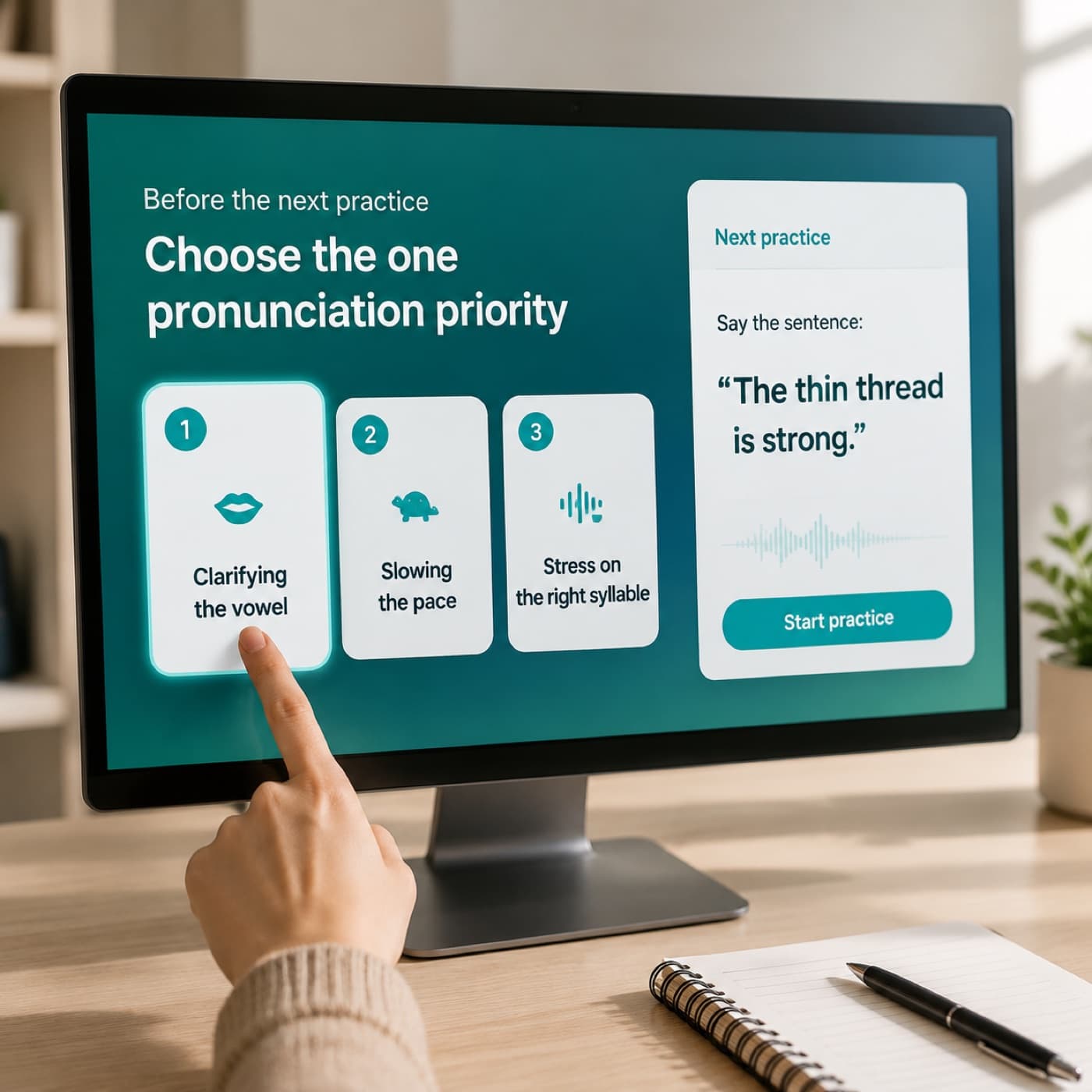
Tutor interface prioritizing one coaching cue before suggesting the next practice prompt
/Learning design

Choose one teaching move—not a score dump

Scores become useful only when they change the next prompt, example, hint or practice activity. The tutor should choose a priority, explain it simply and keep momentum.

  • Prioritize repeated or meaning-changing errors first
  • Ask for a re-record when audio quality is the real issue
  • Use a short sound, mouth or rhythm cue the learner can try immediately
  • Celebrate what worked before asking for a retry
Split desk scene with evolving lesson cards on one side and a stable assessment payload panel on the other
/Product architecture

Let the learning experience evolve without moving the goalposts

Assessment is the stable source of speech evidence. Your prompts, lessons, interface voice and retry logic can evolve independently as you learn what helps learners improve.

  • Use the integration pattern that fits your tutor stack
  • Keep product rubrics and pass thresholds deterministic
  • Store only the evidence needed for progress and support
  • Evaluate the full teaching loop, not only raw score accuracy
/A tutor moment
Illustrative walkthrough

From a good sentence to one better sound

A learner has completed a conversation about travel. The tutor does not interrupt the whole exchange with a dashboard. It notices one repeated sound in a word that matters, gives credit for what worked and invites a small retry.

Learner says
“I sink the train leaves at three.”
Attempt → evidence → next action
01
What worked
Fluency 88

The sentence is smooth enough to keep the conversation moving.

02
Priority
think · /θ/ → /s/

The first sound is repeated and changes the meaning of the word.

03
Tutor choice
One focused retry

Correct one sound before introducing a new prompt or drill.

Tutor can respond
“Nice, that was very smooth. One small sound: for think, let a little air pass over the tip of your tongue—th-ink. Try just the word once, then say the sentence again.”

Implementation note. Chivox identifies the speech evidence; your teaching approach decides the cue, encouragement, retry length and when to move on.

/show-not-tell

Turn evidence into one teachable move

The tutor does not need to repeat every score. It can select the highest-value issue, explain it in the learner’s context and generate a retry that keeps the conversation moving.

tutor-decision.json
{
  "assessment": {
    "overall": 82,
    "priority": { "word": "think", "phoneme": "θ", "score": 54 },
    "audio_quality": 96
  },
  "tutor_action": {
    "type": "focused_retry",
    "cue": "Keep your tongue lightly between your teeth for /θ/.",
    "next_prompt": "Try: I think they are ready."
  }
}
/conversation-loop

One learner turn, one useful next step

Move from a natural learner turn to one teaching priority and a focused retry without losing conversational context.

Context stays with the learner
  1. Learner turn01
    Learner speaks in context
  2. Speech evidence02
    Assessment returns usable evidence
  3. Tutor decision03
    Tutor chooses one teaching move
  4. Focused retry04
    Learner retries with momentum
/questions

Common implementation questions

Why not use transcription confidence alone?

Transcription answers what the system heard. Pronunciation assessment adds evidence about how the utterance was produced, including segmental and fluency detail.

Can the same tutor support English and Mandarin?

Yes. The orchestration can stay consistent while routing each activity to language-specific assessment and feedback logic.

/contact

Let’s build your voice agent together.

Tell us what you’re building. We’ll reply within one business day with pilot credits, pricing, or a deployment plan — whichever you need first.