Building a grounded AI language tutor loop
A practical pattern for moving from learner audio to explanation, targeted practice, and a measurable retry.
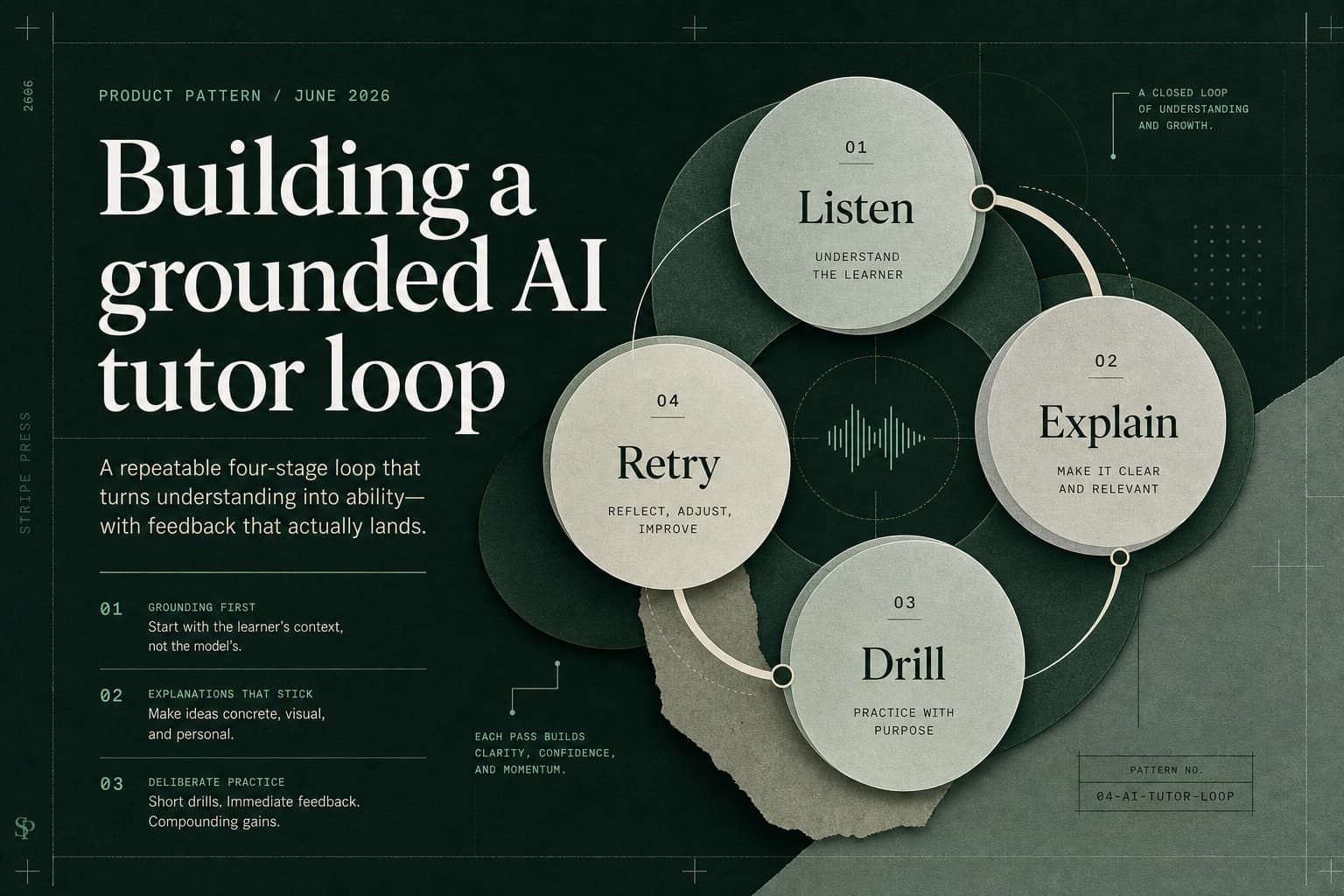
The most useful language tutors do more than chat. They listen, identify a specific issue, explain it at the right level, and create a chance to improve immediately. That loop only works when speech evidence stays outside the prompt and inside a reliable tool result.
Keep assessment outside the prompt
Use a dedicated speech assessment tool to produce stable evidence. Let the language model decide how to communicate that evidence, not invent the evidence itself.
When the model both “hears” and coaches from the same free-form turn, scores drift and explanations become hard to audit. A tool call restores a clean boundary: assessment produces fields, the tutor turns those fields into teaching language.
Generate narrow practice
Practice should isolate the target sound, stress pattern, or tone before returning to the original sentence. A narrow drill makes improvement easier to hear and measure.
Good loops often look like: 1. assess the original utterance 2. select one priority issue 3. explain briefly 4. run a focused drill 5. reassess with the same metric
Skipping the narrow drill is why many chat tutors feel helpful in the moment and weak over a week.
Close the loop with the same measure
Score the retry using the same fields that triggered the coaching. The tutor can then acknowledge a real improvement or adjust the next exercise without guessing.
If the first turn failed on a rising tone, the success condition should still be that rising tone. Changing the rubric mid-loop makes the learner feel progress is arbitrary.
Keep the tutor voice consistent
Tone matters. The same product should not sound like a strict examiner on one turn and an overly cheerful companion on the next. Define a short style guide for praise, correction, and escalation.
Use speech evidence to choose intensity. Mild issues get a light nudge. Repeated meaning-breaking errors get a clearer intervention. Invalid audio gets a practical retry request, not a personality performance.
Log the loop for product learning
Store the sequence of assess → coach → drill → reassess events. Over time you will see which explanations actually improve retries, which drills stall, and where learners abandon the session.
That product telemetry is more valuable than another prompt rewrite. It tells you whether the loop works as a learning system.