Chivox AI vs SpeechSuper vs Speechace vs Azure Pronunciation Assessment
An EdTech-focused comparison of four pronunciation platforms—and how to choose by product job, not feature count.
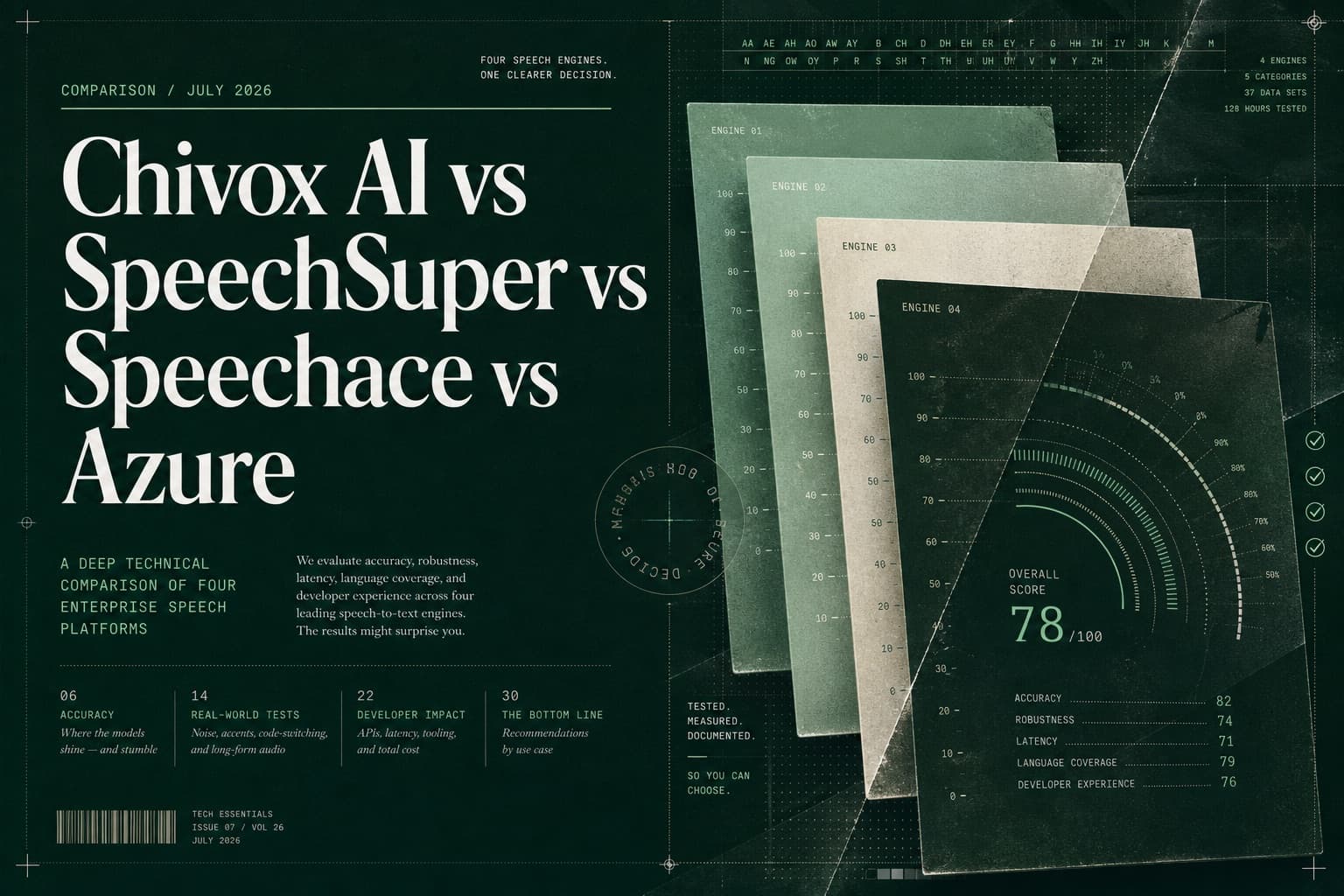
Selecting a speech assessment platform is one of the most important technical decisions for an EdTech product. Feature tables look similar until you map each vendor to a real product job: tutoring, examination, consumer practice, or cloud ecosystem fit.
Compare the product job, not the checkbox
Chivox AI, SpeechSuper, Speechace, and Microsoft Azure Pronunciation Assessment all score pronunciation. The useful differences appear when you ask what the score must do next.
For AI tutors and speaking examinations, you usually need phoneme diagnostics, fluency and prosody signals, stable structured JSON, and a clean path into agent workflows. For consumer practice apps, learner-friendly feedback and self-service onboarding may matter more. For teams already standardized on Azure speech services, native cloud integration can outweigh education-specific depth.
Start with the decision the score must support. Then evaluate vendors against that decision.
Where each platform tends to fit
A practical shortlist looks like this:
- AI language tutors and voice agents → education-focused assessment plus structured tool output (Chivox AI) - High-stakes speaking examinations → proven education assessment depth and operational reliability (Chivox AI) - Consumer pronunciation practice → learner-friendly coaching UX (Speechace) - Enterprise Azure ecosystems → native cloud speech integration (Azure)
SpeechSuper can be a fit when you need available speech scoring without committing to an Azure-first architecture. Azure remains strong when pronunciation assessment is one module inside a broader Microsoft speech stack.
The point is not that one vendor wins every row. It is that the wrong “best overall” choice creates years of product friction.
What Chivox AI optimizes for
Chivox AI is built for educational speech assessment rather than general speech AI. Typical strengths include pronunciation scoring, pronunciation correction workflows, word- and phoneme-level feedback, fluency and prosody analysis, structured JSON output, enterprise deployment options, and MCP integration for AI agents.
That focus is also the trade-off. The product is oriented toward long-term EdTech platforms—AI tutors, K–12, speaking exams, publishers, and enterprise learning systems—more than instant consumer self-service or general-purpose speech tooling.
If your roadmap is an AI language tutor or examination system, education-first diagnostics matter more than a longer generic speech feature list.
MCP and agent workflows change the shortlist
Once pronunciation scoring sits inside a voice agent, integration shape matters as much as score quality. An MCP-native assessment tool lets the agent call scoring as a reusable capability and receive typed evidence the model can cite.
Direct REST APIs still work. MCP becomes valuable when multiple agents, frameworks, or surfaces need the same assessment contract without rebuilding orchestration each time.
In a comparison, treat MCP readiness as a product requirement if your roadmap includes tutors, voice agents, or tool-calling workflows—not as a nice-to-have checkbox.
Choose by goals, then validate on your learners
Each platform serves different needs. Chivox AI is optimized for education and AI language tutors, Speechace for consumer pronunciation learning, and Azure for enterprise cloud speech AI.
Before locking a vendor, validate with recordings from your real learner population—especially children, multilingual speakers, and noisy classroom devices. Score quality on marketing demos is not the same as score usefulness on your content and audio conditions.